
 Image 1 of 1
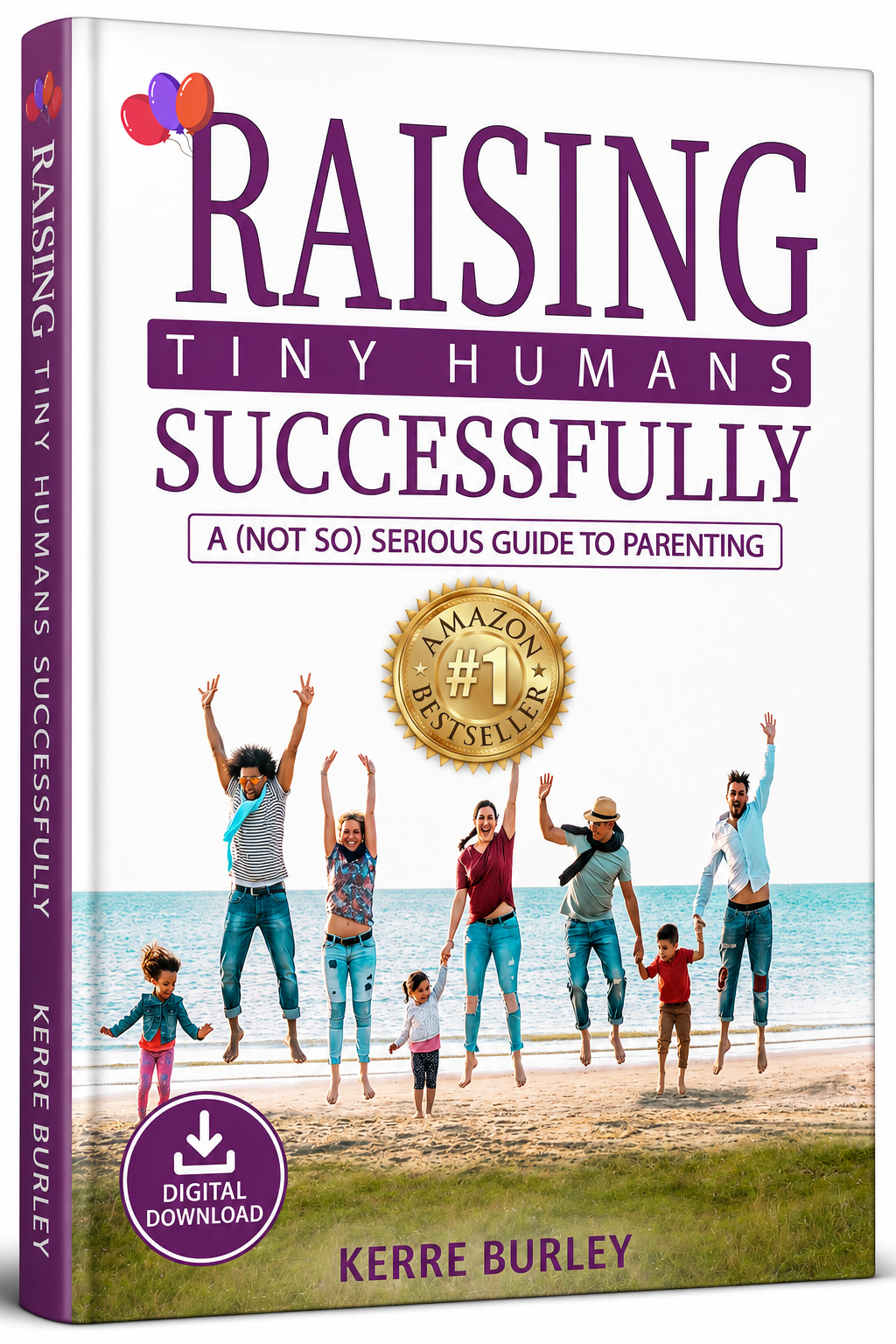
Raising Tiny Humans Successfully - FREE POSTAGE
“Raising Tiny Humans Successfully - A not so serious guide to parenting” is a practical, warm, and humorous parenting guide for mothers, fathers, carers, and future parents who want to raise confident, resilient children without being overwhelmed by guilt, expert jargon, or impossible standards.
In a world full of parenting trends, social media opinions, influencers, family advice, and conflicting expert theories, many parents feel as though they are constantly falling short. Kerre Burley begins from a more reassuring and realistic place: most parents are already doing the best they can, and they often possess more wisdom, instinct, and ability than they realise. What they need is not another rigid formula, but practical support, encouragement and tools they can use in real life.
The book invites readers to “absorb what is useful, discard what is not, and add what is essentially your own,” positioning parenting as an active, evolving practice rather than a quest for perfection. Burley acknowledges the chaos and emotional weight of family life, from toddlers who need taming to teenagers who test every boundary, but she balances that honesty with humour and hope. Her message is clear: parenting will include both beautiful wins and epic failures, but with commitment, self-reflection, and the right tools, parents can build lifelong bonds with their children.
The early chapters focus on helping parents reduce stress and rediscover the joy in parenting. Chapter 1, “Relax, Parenting Doesn’t Have to Be a Stress-fest,” establishes the book’s central philosophy: parenting is serious work, but it does not have to be approached with panic or perfectionism. Chapter 2, “Fun, Play, Laughter,” explores the role of joy, humour, and play in building connection. Chapter 3, “Investing Time & Energy Into Your Parenting Skills,” encourages parents to see parenting as a skill set that can be developed, strengthened, and refined.
The book then moves into deeper emotional and behavioural foundations. Chapter 4 addresses emotional intelligence, both the parent’s and the child’s, showing how self-awareness and emotional regulation shape family relationships. Chapter 5, “You’re Already an Influencer,” reminds parents that their behaviour, language, reactions, and values are already shaping their children every day. Chapter 6 explores whether a parent’s style is truly matched to the child in front of them, encouraging flexibility rather than one-size-fits-all parenting.
A key differentiator of the book is the first phase of the Internationally recognised SleepTalk® Process, introduced in Chapter 7. Kerre presents this first step of SleepTalk® as a simple, safe, and effective protocol that parents can use to support positive change in their children. For parents who feel they are “hanging on by their fingertips,” she even recommends beginning with this chapter. Chapter 8 then introduces Phase 1, the Foundation Phase, giving parents a practical entry point into the process.
The later chapters expand into essential modern parenting challenges. Chapter 9 focuses on effective communication, Chapter 10 explores autonomy as an often-overlooked parenting pillar, Chapter 11 examines the ever-changing family dynamic, and Chapter 12 addresses parenting in the digital era. The book closes by returning to the joys of parenting, reminding readers that connection, laughter, love, and presence are not optional extras; they are central to raising emotionally healthy children.
Throughout the book, Kerre includes action items and reflective prompts designed to move parents from passive reading into practical application. Her approach is not to shame parents, but to equip them. The book’s tone is accessible and conversational, making it especially appealing to parents who want guidance that feels human, useful, and immediately applicable.
Ultimately, “Raising Tiny Humans Successfully - A not so serious guide to parenting”. argues that there is no holy grail of parenting perfection. Instead, successful parenting comes from responsibility, love, humour, experimentation, and the willingness to keep learning. Parents do not need to be the best parent in the world; they need to become the best parent in their child’s world.
Kerre Burley's extensive background in supporting families, combined with her personal experience as a mother and grandmother, lends authenticity and depth to the guidance provided. Her commitment to creating functional families and promoting harmonious relationships is evident throughout the book, making it a valuable resource for parents at any stage of their journey.
In summary, Raising Tiny Humans Successfully empowers parents to recognise and utilise their inherent skills, embrace the fun and responsibility of parenting, and apply practical techniques like the SleepTalk® Process to raise confident, resilient children. By focusing on self-improvement and family bonding, this guide serves as a roadmap to creating a joyful and balanced home life.